 by
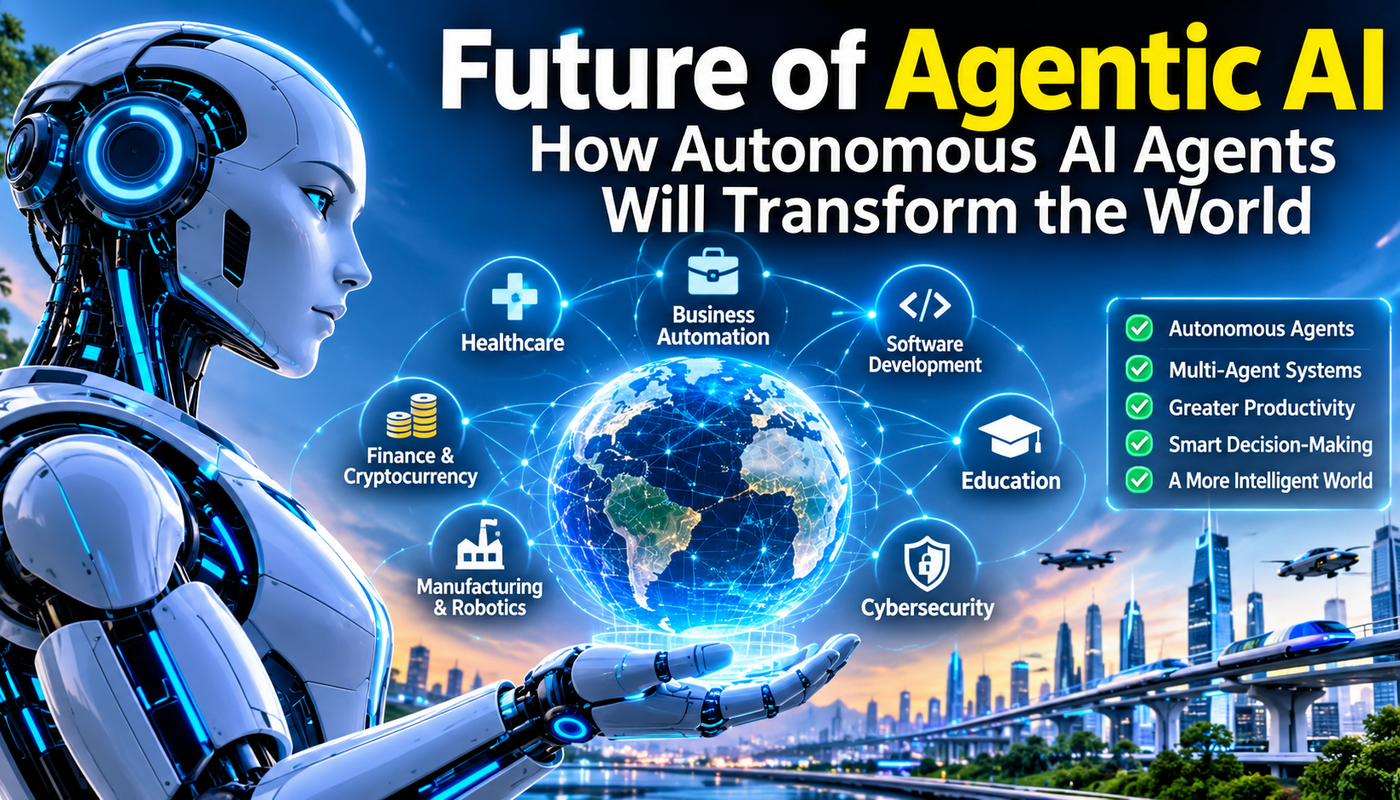
Introduction to the Future of Agentic AI
The future of Agentic Artificial Intelligence (Agentic AI) represents one of the most significant developments in modern technology. As artificial intelligence continues to evolve, the focus is shifting from systems that simply respond to human instructions toward intelligent agents capable of planning, decision-making, problem-solving, and executing complex tasks autonomously. Unlike traditional AI applications, which primarily generate information or provide recommendations, Agentic AI systems can understand objectives, break them into manageable steps, interact with digital tools, analyze information, and take actions to achieve specific goals. This technological advancement is expected to reshape industries, transform business operations, improve productivity, and create new opportunities across the global economy.
What Is Agentic AI and How Does It Work?
Agentic AI is an advanced approach to artificial intelligence that enables autonomous systems to perform tasks with varying levels of human supervision. These systems use large language models, machine learning, reasoning capabilities, memory, and external tools to complete multi-step activities. For example, a traditional AI chatbot can explain how to conduct market research, whereas an AI agent can potentially collect market information, analyze competitors, prepare reports, identify business opportunities, and organize the findings. This ability to move beyond information generation toward goal-oriented execution makes Agentic AI an important development in the evolution of intelligent automation.
The Rise of Autonomous AI Assistants
One of the most significant developments in the future of Agentic AI will be the growth of autonomous digital assistants. These intelligent systems will increasingly help individuals manage professional and personal responsibilities, including scheduling appointments, organizing documents, conducting research, preparing reports, managing communications, and coordinating daily workflows. Instead of requiring users to interact with multiple applications manually, AI agents will increasingly be able to connect different software platforms and perform coordinated tasks. As these capabilities improve, personal AI assistants could become an important part of everyday digital life, helping individuals save time, reduce repetitive work, and make more informed decisions.
How Agentic AI Will Transform Businesses
The business sector is expected to experience substantial changes as organizations adopt Agentic AI technologies. Companies are increasingly exploring autonomous agents to improve customer service, automate administrative operations, support sales activities, analyze business performance, and optimize internal workflows. For example, an AI-powered business system could coordinate customer inquiries, identify purchasing patterns, prepare marketing campaigns, monitor inventory, and generate financial reports. Multiple specialized agents could collaborate under a central coordination system, allowing businesses to automate complicated processes while maintaining human oversight for important decisions. These capabilities could make advanced automation more accessible to startups, small businesses, and large enterprises.
Agentic AI in Software Development
Another important area of transformation will be software development. Agentic AI systems are increasingly being designed to assist with writing code, identifying software vulnerabilities, debugging applications, generating documentation, and conducting automated testing. In the future, software development workflows may involve several specialized agents working together to understand project requirements, design application architecture, develop features, test functionality, and resolve technical problems. Human developers will remain important for architectural decisions, security reviews, creative problem-solving, and quality assurance. Rather than eliminating the need for software professionals, these systems are likely to change development practices and increase the importance of skills involving AI supervision, system design, and technical judgment.
The Future of Agentic AI in Healthcare
Healthcare is another industry where Agentic AI could deliver meaningful improvements. Intelligent agents may help healthcare organizations organize medical records, coordinate appointments, analyze administrative information, support clinical documentation, and assist medical professionals in reviewing relevant research. AI-powered systems could also help identify patterns in large healthcare datasets and support the development of more personalized treatment strategies. However, healthcare applications require particularly strong privacy protections, clinical validation, regulatory compliance, and professional supervision. Autonomous systems should support qualified healthcare professionals rather than independently making high-stakes medical decisions without appropriate authorization.
Agentic AI in Finance and Cryptocurrency
The financial services industry is also expected to benefit from advances in Agentic AI. Financial institutions can use intelligent agents to monitor transactions, identify suspicious activities, analyze financial information, support compliance procedures, and improve customer service. In cryptocurrency markets, AI agents may help monitor blockchain transactions, identify unusual wallet activities, analyze market movements, and support cybersecurity investigations. These capabilities could strengthen financial monitoring and operational efficiency. Nevertheless, autonomous financial activities introduce risks involving inaccurate analysis, unauthorized transactions, market volatility, and security vulnerabilities. Strong access controls, transaction limits, monitoring systems, and human approval mechanisms will therefore remain essential.
The Growth of Multi-Agent AI Systems
The future of Agentic AI will also involve the development of multi-agent systems. Instead of relying on